
Borrowed growth
22 Apr 2026
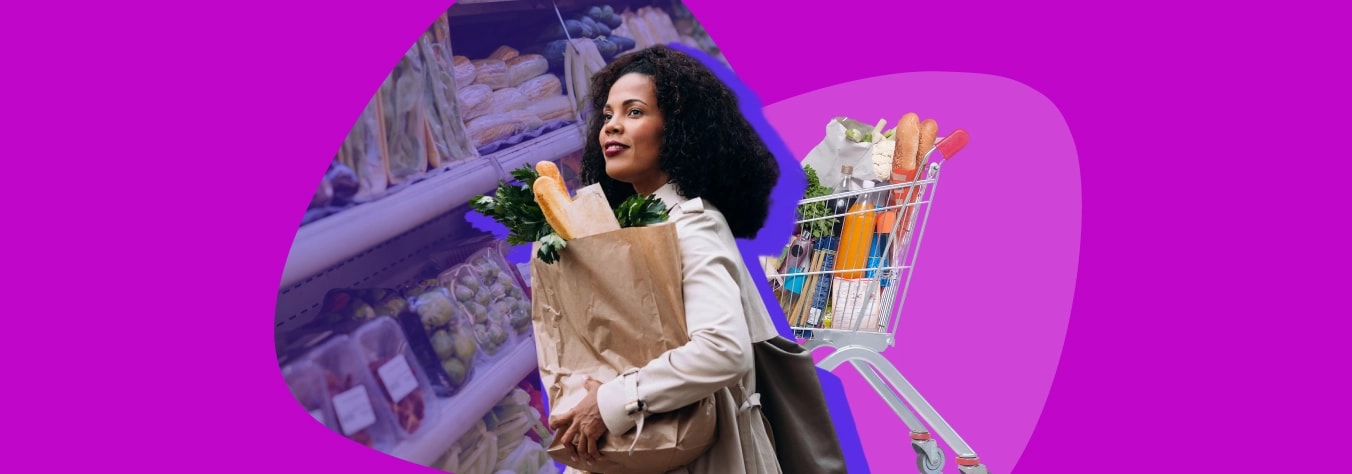
Online grocery just posted its best quarter in four years. The customer driving it doesn't love you, doesn't plan to stay, and would rather be browsing the aisles.
Online grocery just posted its best quarter in four years and the industry is celebrating the wrong thing. Alright the growth is real, but it's disguising a tough to stomach truth: the customer driving it doesn't love you, doesn't plan to stay, and would rather be browsing the aisles. Half of online's growing users still say in-store shopping is more fun. They're not converts. They're hostages of their own budget.
For years, online grocery's pitch was convenience. Shop in your pyjamas, get it delivered, free up your evening. It wasn't enough to push past 10%. The people it stuck with were higher income families whose time cost more than the delivery slot. The rest drifted back to physical stores.
Now something different is happening. Food prices are rising again and people are shifting back towards online. But the reason has flipped. In 2021, skipping stores felt like missing out. In 2026, the less you see in store, the less you spend. New online consumers came for the financial protection, removal of temptation and the precision running total, not convenience. Locked baskets please!
Look at the income data and the story sharpens. Higher income usage has been flat for years. The growth is being driven by lower and middle income households who've arrived at online not for the convenience but the containment. That's a different customer, motivation and loyalty.
Online grocery's biggest vulnerability? A pay rise.
And here's the vulnerability everyone's ignoring. These are reluctant pragmatists, choosing online for what it prevents, overspending, rather than what it provides. Online grocery's current growth is borrowed, not earned. If prices ease, or if circumstances improve even slightly, a large chunk of this new customer base will walk straight back to the aisles without a backward glance. Tempted by what is irresistible to us hunter-gatherers: the satisfaction of providing for the tummies we love most, as well as the enjoyment of discovery and of course that winning feeling of hunting down a yellow sticker.
The job now: stop celebrating the number and start building for the reason. Design for control, not convenience. Build financial features into the app: running totals, spend-vs-last-week, the ability to edit your basket right up to delivery. Make the most of what stores can't easily offer: cross-aisle comparison at a glance, frozen for fresh, tinned for ambient, the swap that saves £2 without breaking your stride. Show people what they've saved, that's the loyalty mechanic. And stop doing things that punish the very customer driving your growth. Substitutions feel like someone else spending your money. Multi-buy deals read as tricks. "You might also like" cuts directly against the reason they're here.
More articles
 The contrarian
Organic lost to clarity, not price
05 Jun 2026We're researching our health harder than ever, organic is the one claim that got cloudier.
 The unsaid
Scraped together, the new from scratch
05 Jun 2026Not missing meals, we're just not quite having one either.
-1-1280x446.webp&w=1920&q=90) The unsaid
The unsaidMaking their own weather
24 Jul 2026Confidence is rising. Trust in government isn't. Britain's optimism comes from people adapting, not believing.